Jeff Koons’ Balloon Dog is one of the most recognizable sculptures in contemporary art. With its playful shape, mirror-like surface, it turns an ordinary balloon animal into a powerful artwork. At first glance, it feels lighthearted and familiar. But behind that cheerful appearance lies a complex conversation about joy, childhood and the value of art.
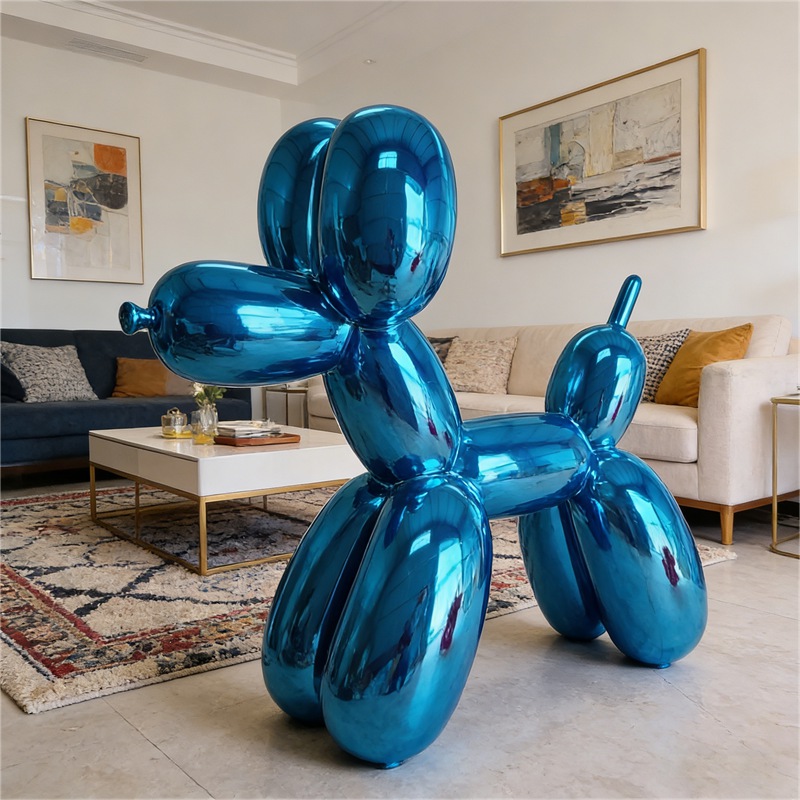
As a senior sculpture consultant and a long-time admirer of Jeff Koons, I have always found Balloon Dog fascinating. It is one of those rare works that immediately captures my attention. In this blog, I’ll explore what Balloon Dog is, why it became so famous, what it means, how it was made, and why it continues to inspire both collectors and art lovers around the world.
What Is Jeff Koons’ Balloon Dog?
Balloon Dog is a large-scale sculpture by Jeff Koons that resembles a balloon animal twisted into the shape of a dog. It is part of his celebrated Celebration series, a body of work that transforms everyday objects associated with parties, childhood, and happiness into monumental works of art.
Although it appears soft and inflatable, Balloon Dog is actually made of highly polished stainless steel with a transparent color coating. This contrast between appearance and material is one of the reasons the sculpture is so striking. It looks temporary and fragile, yet it is physically durable and enduring.
Why Is Balloon Dog So Famous?
There are several reasons why Balloon Dog became so famous.
First, the sculpture is immediately accessible. Almost everyone recognizes the form of a balloon animal, so the work creates an immediate emotional connection. It reminds viewers’s experiences of childhood, celebration, parties, which always bring happiness to them.
Second, the work sits at the intersection of high art and popular culture. This is central to Koons’ artistic language. He often draw inspiration from daily things ,combine with the art .showcasing a surprise wonder for viewers
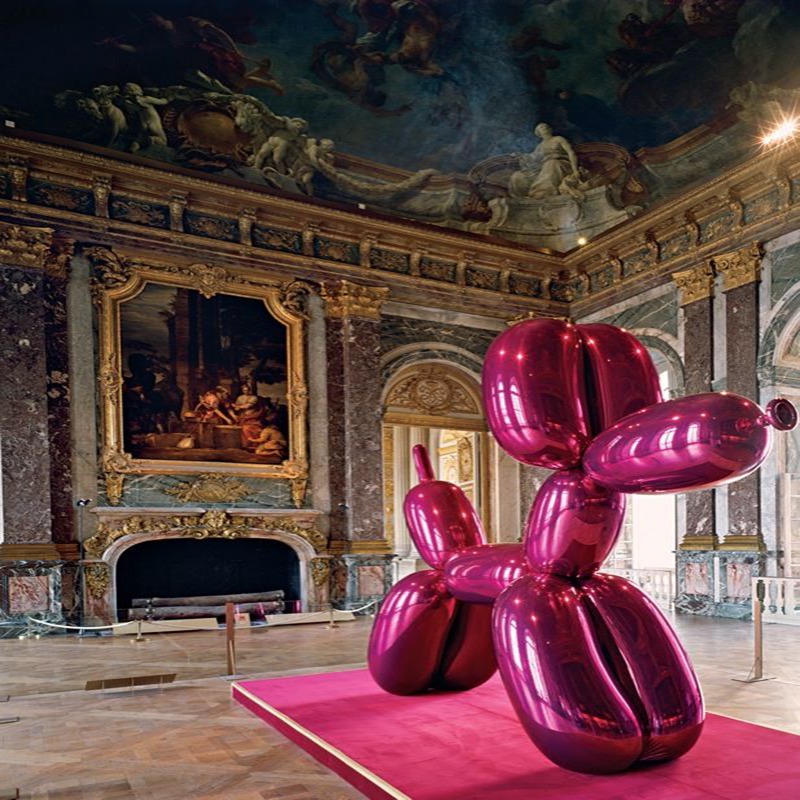
Third, Balloon Dog gained enormous public attention because of its auction history. In 2013, Balloon Dog (Orange) sold at Christie’s for 58.4 million, setting a record at the time for the highest price achieved at auction for a work by a living artist. That sale helped cement the sculpture’s legendary status in both the art world and the wider public imagination.
The Origin of Balloon Dog: A Sculpture Born from Joy
One of the most compelling ways to understand Balloon Dog is through the idea of joy.
Koons has long been interested in objects that connect art to everyday life. In many of his works, he draws from popular culture, decorative art, childhood imagery, and ordinary consumer objects. Instead of rejecting these things as trivial, he reintroduces them as worthy of attention, admiration, and reflection.
Created between 1994 and 2000, Balloon Dog can be seen as a celebration of innocence and delight. A real balloon animal is fragile and short-lived. Koons turns that fleeting object into a lasting one, preserving a moment of happiness in solid metal.
This tension between the temporary and the permanent is part of what gives the work its emotional power.
What Is Balloon Dog Made Of?
Balloon Dog is made from mirror-polished stainless steel with a transparent color coating. Koons produced the sculpture in several colors, including blue, magenta, orange, red, and yellow.
The use of stainless steel is essential to the work’s effect. Its reflective surface creates a dynamic interaction between the sculpture, its surroundings, and the viewers. As people move around it, they see themselves and the environment reflected across its curved body. This gives the work a constantly changing visual life.
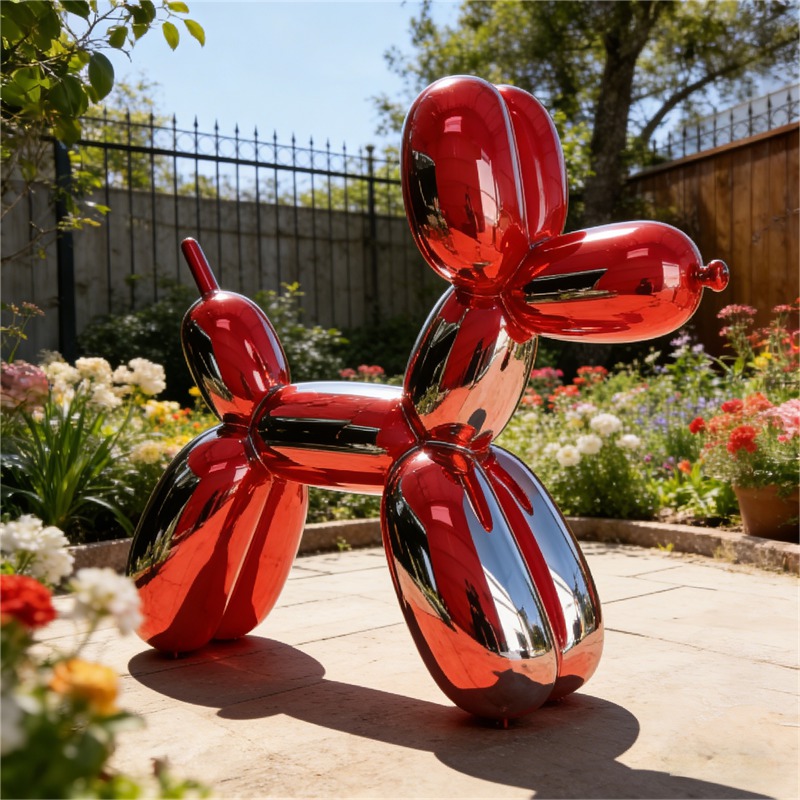
The material also adds another layer of meaning. A balloon is usually light, cheap, and temporary. Stainless steel is heavy, expensive, and enduring. By replacing one with the other, Koons creates a fascinating contradiction that makes the sculpture more than a simple visual joy.
What Does Balloon Dog Mean?
The meaning of Balloon Dog is one of the main reasons the sculpture continues to spark discussion.
On one level, the work expresses joy, innocence, and celebration. Its form recalls childhood parties and playful moments, making it emotionally open and inviting.
Some critics have argued that Koons’ art is visually impressive but emotionally empty. I understand why his work can divide opinion, but I do not agree with that reading. In my view, the apparent simplicity of Balloon Dog is exactly what makes it powerful. Simple forms often carry complex meanings. In Chinese thought, there is a saying that simplicity can contain the essence of truth. Balloon Dog may look uncomplicated, but it speaks to something fundamental in human life: the need for joy.
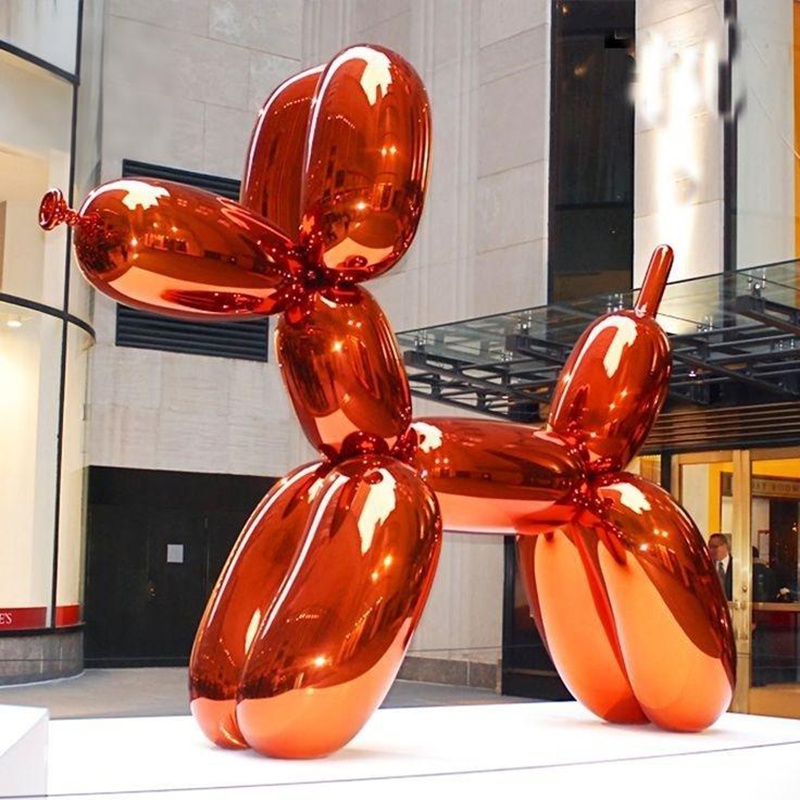
That is why I believe the sculpture resonates so widely. People do not respond to it only because it is famous or expensive. They respond because, beneath its polished surface, it reflects something universal — our attraction to happiness, play, innocence, and emotional release.
Is Balloon Dog the Only Famous Sculpture in Koons’ Celebration Series?
No. Balloon Dog is only one part of Koons’ broader Celebration series, which includes other works inspired by festive and childhood-related forms. These works share a common visual language built around delight, nostalgia, color, and larger-than-life presentation.
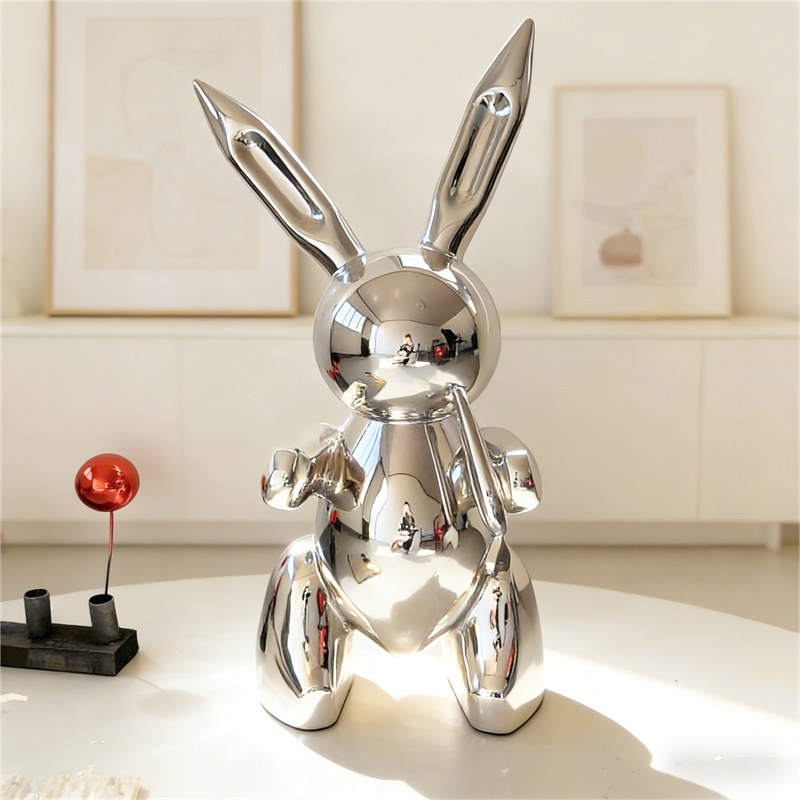
Among Koons’ best-known works are balloon-inspired sculptures such as Rabbit, which has also become one of the most iconic sculptures in contemporary art. Together, these works show how Koons repeatedly transforms familiar objects into reflective, monumental images that blur the line between everyday life and fine art.
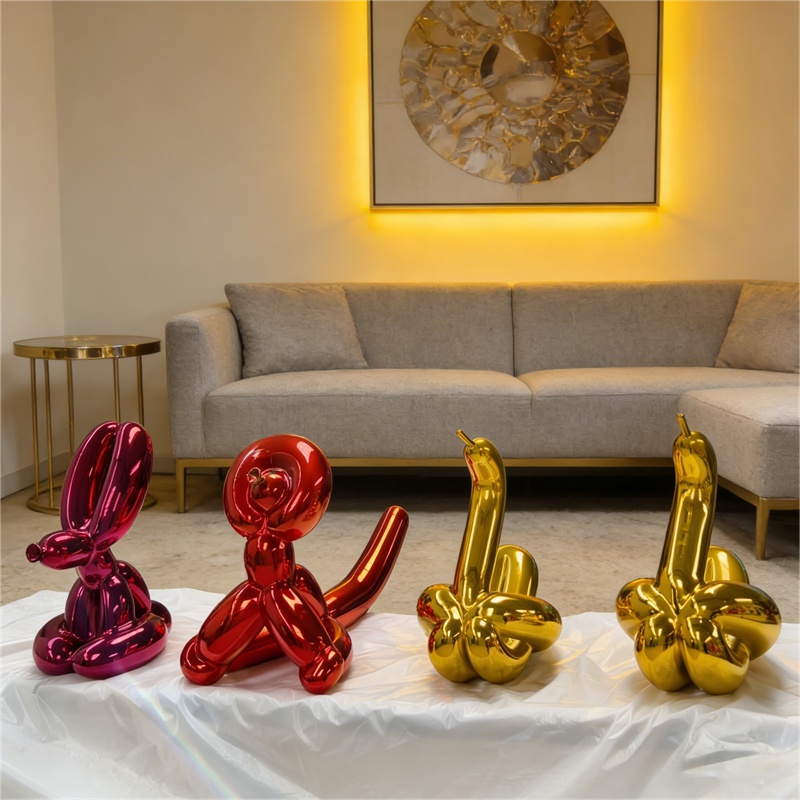
For collectors, designers, and sculpture enthusiasts, this is part of the lasting appeal of Koons’ work. His sculptures do not simply decorate a space — they change its emotional atmosphere. They introduce surprise, energy, and conversation.
A Real-Life Example of Why Balloon-Inspired Sculpture Matters
Over the years, I have seen how balloon-inspired sculptures can connect with people on a deeply personal level.
One of our clients once chose a balloon rabbit for his young son, who was especially drawn to its playful form. What began as a decorative piece quickly became something more meaningful within the family. According to the client, the child loved the sculpture so much that he would often run to it, hug it, and speak to it as if it were a friend. In one touching moment after a disagreement with his father, the little boy held the balloon rabbit and whispered,
“Don’t be angry with papa. He brought you home for me. He is a good father.”
Stories like this remind me that sculptures inspired by joy are not superficial at all. They can become emotional anchors in a home. They can hold memory, affection, and connection in ways that go far beyond appearance. This is also why works like Balloon Sculpture continue to matter: they are not only seen, but felt.
Final Thoughts
Jeff Koons’ Balloon Dog is famous not only because of its record-breaking price or iconic appearance, but because it captures a tension that lies at the heart of contemporary life: the meeting point between innocence and commerce, play and prestige, simplicity and complexity.
For me, the essence of Balloon Dog is joy. Not naive joy, but a joy that survives scale, polish, criticism, and time. That is why the sculpture continues to resonate with so many people across different cultures and generations.
If a great sculpture can make us pause, smile, remember, and think more deeply about ordinary life, then Balloon Dog has already achieved something extraordinary.
FAQ
Who created Balloon Dog?
Balloon Dog was created by Jeff Koons, one of the most well-known contemporary artists in the world.
What is Balloon Dog made of?
It is made of mirror-polished stainless steel with a transparent color coating.
Why is Balloon Dog so famous?
It is famous for its instantly recognizable form, monumental scale, reflective finish, cultural significance, and record-breaking auction sale.
What does Balloon Dog symbolize?
It is often interpreted as symbolizing joy, childhood, celebration, innocence, and the transformation of ordinary objects into high art.