
Mirror-polished stainless steel
Why choose a mirror-finish sculpture?
A mirror-polished surface makes the surroundings part of the artwork. It can reflect a bright sky, bring movement to an interior, and give even a simple form a striking presence. The finish also demands careful fabrication, polishing, and site planning. Here is what to look for.
01 / Visual impact
One sculpture, a changing view
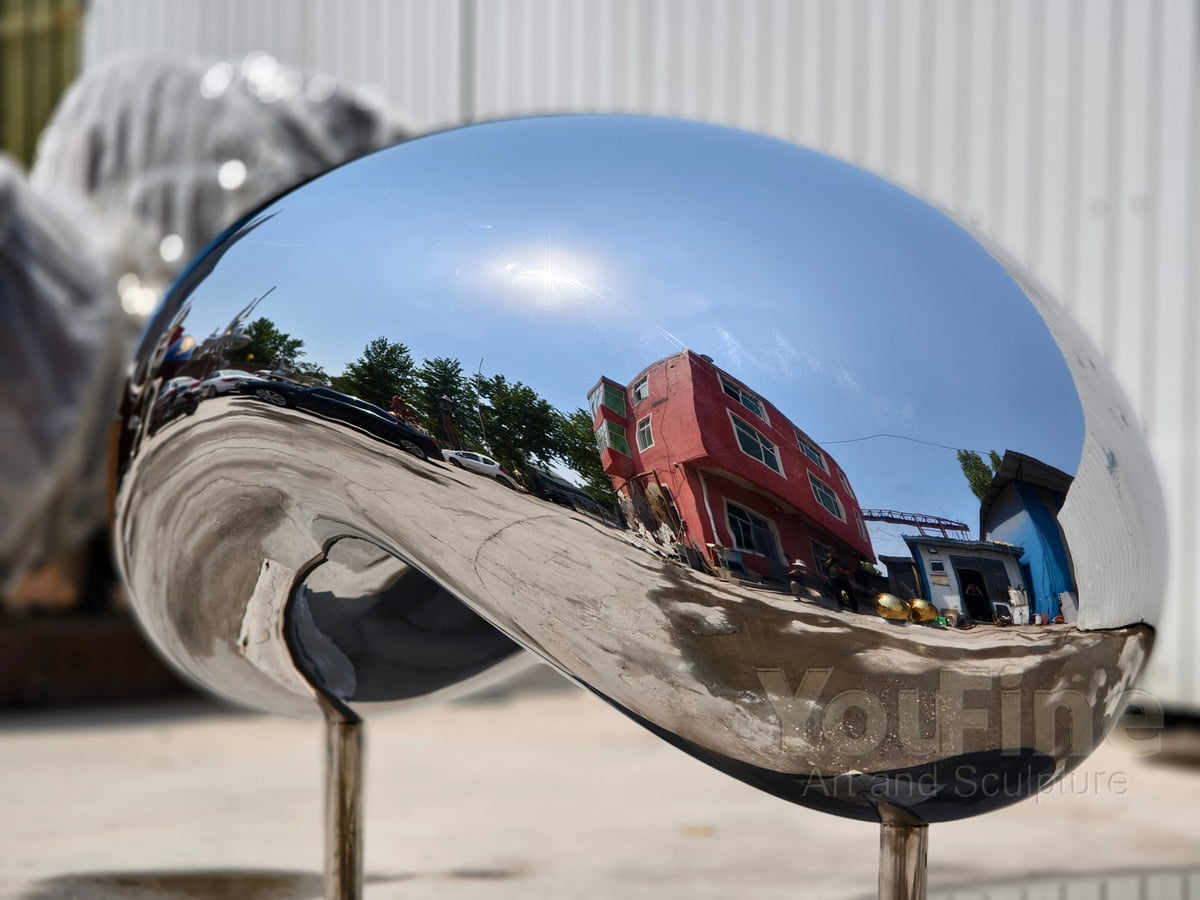
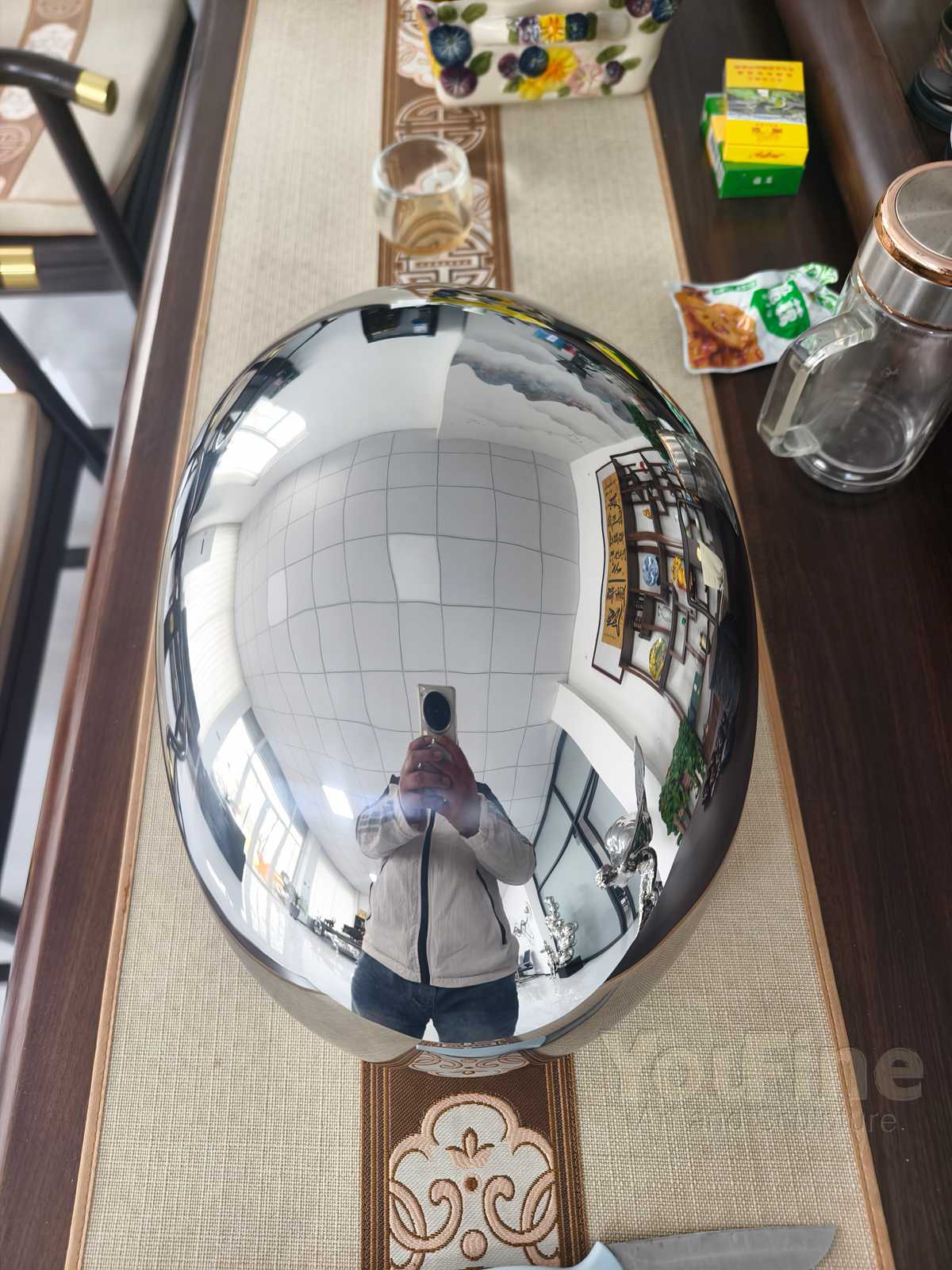
The same polished form looks different as daylight, weather, and people change around it. Outdoors, it picks up sky and architecture; indoors, it brings surrounding colors and forms into the composition.
Curved surfaces bend reflections, while flatter areas give a clearer mirror effect. Decide where visitors will first see the sculpture and what will appear in its surface from that angle.
02 / Finish quality
Details worth seeing up close
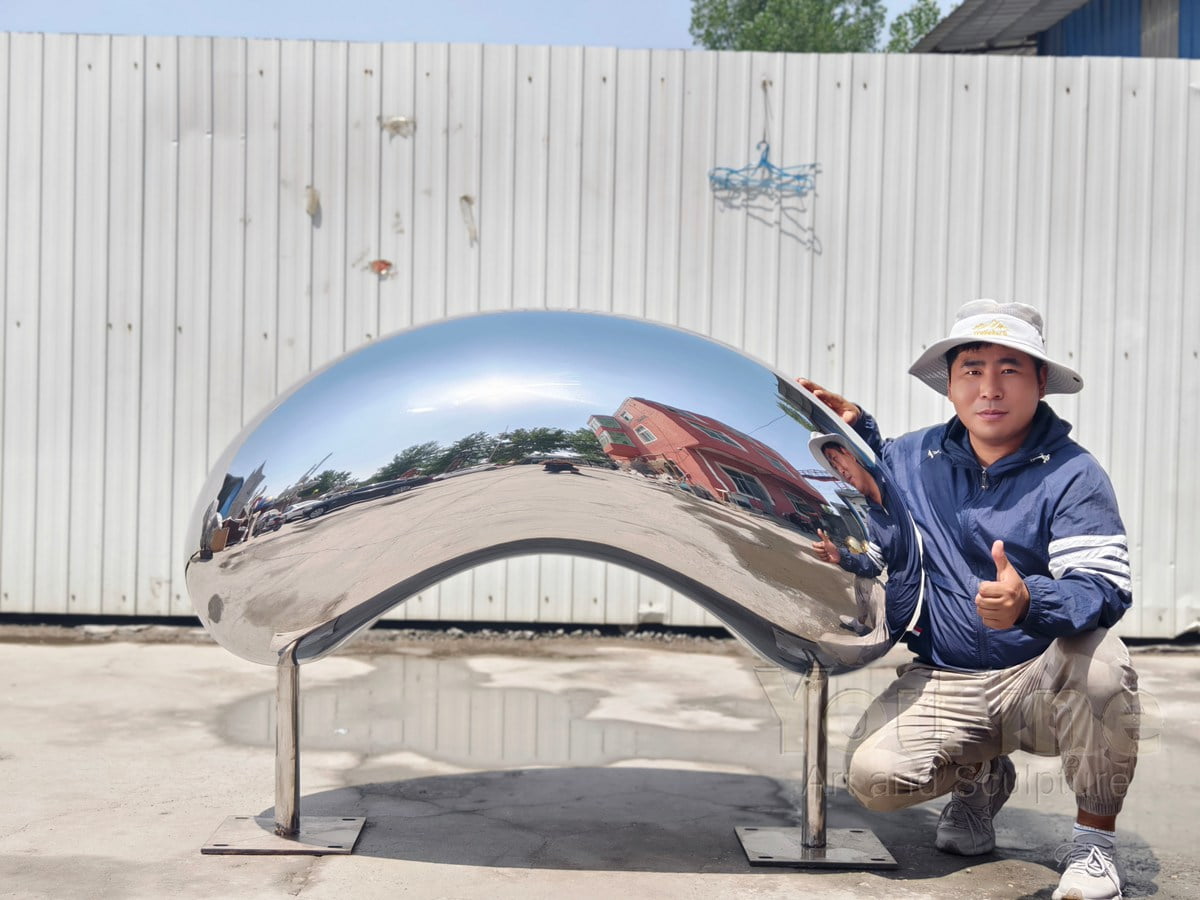
A mirror finish draws attention to the surface. Smooth transitions, well-finished edges, and consistent polishing matter because visible marks can interrupt the reflection.
We recommend reviewing close-up images from multiple angles, including the areas around curves and joins, before approving a finished sculpture.
03 / Design flexibility
From a single focal point to a coordinated installation
Mirror polishing works with rounded, faceted, and wall-mounted forms. The right design depends on the space, the viewing distance, and how people will move around it.
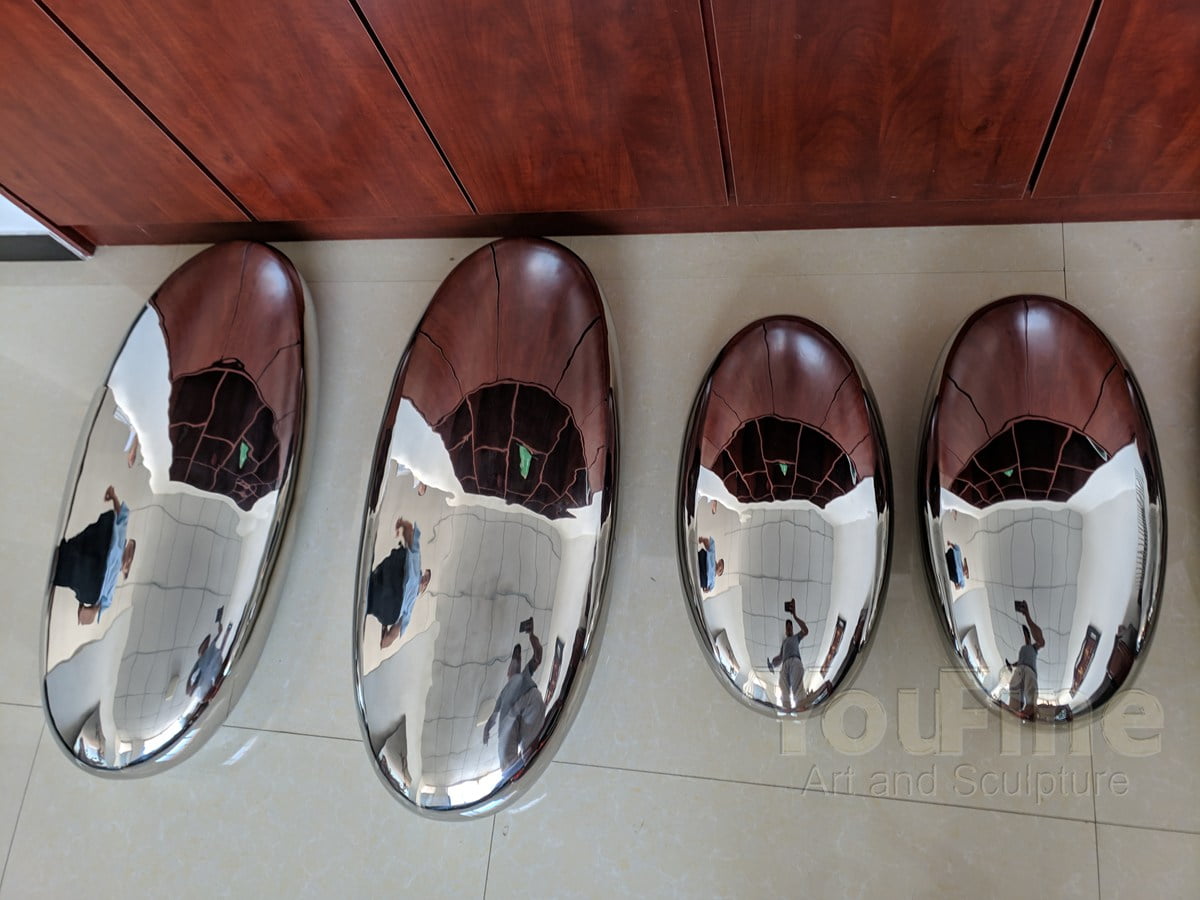
Wall-mounted composition
Repeated forms create rhythm and reflect the room from different positions.
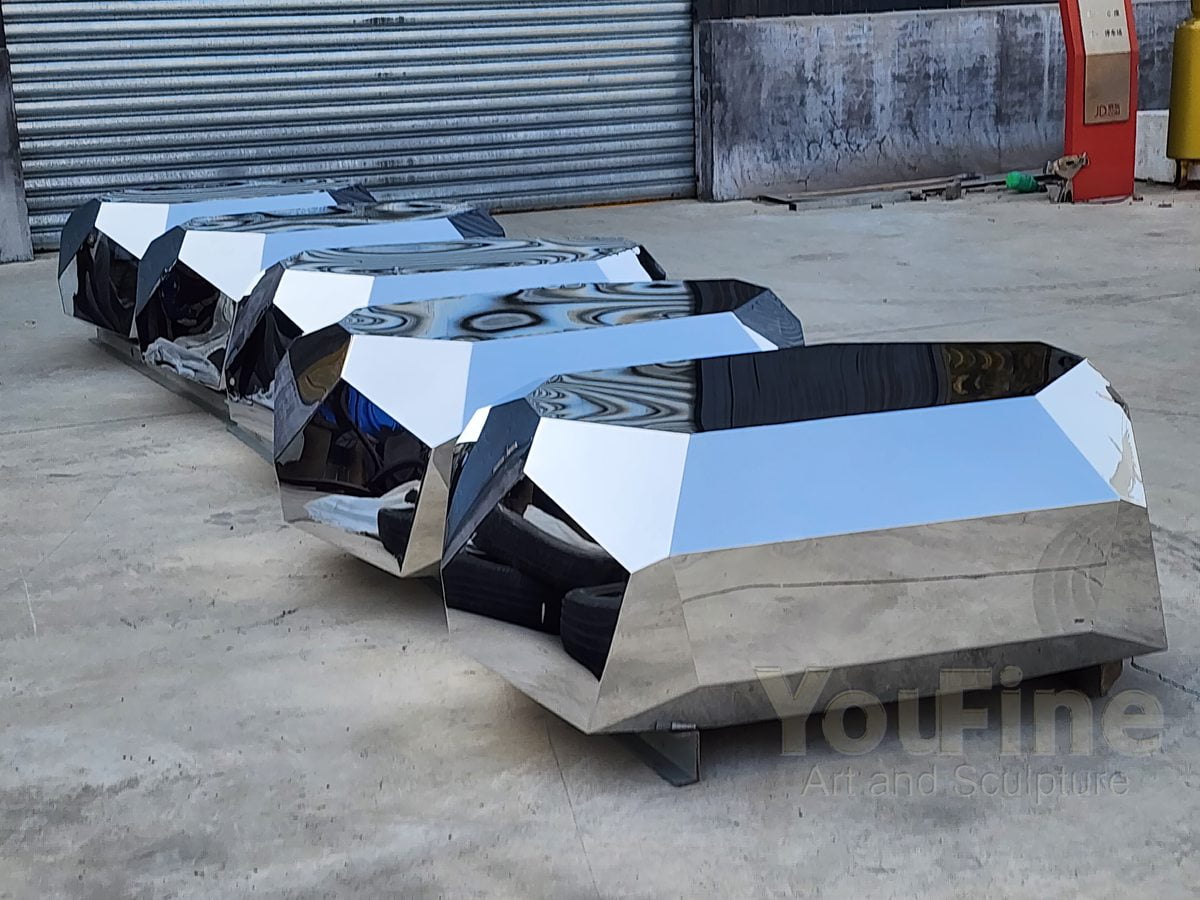
Faceted forms
Angular surfaces divide the surroundings into bold, shifting reflections.
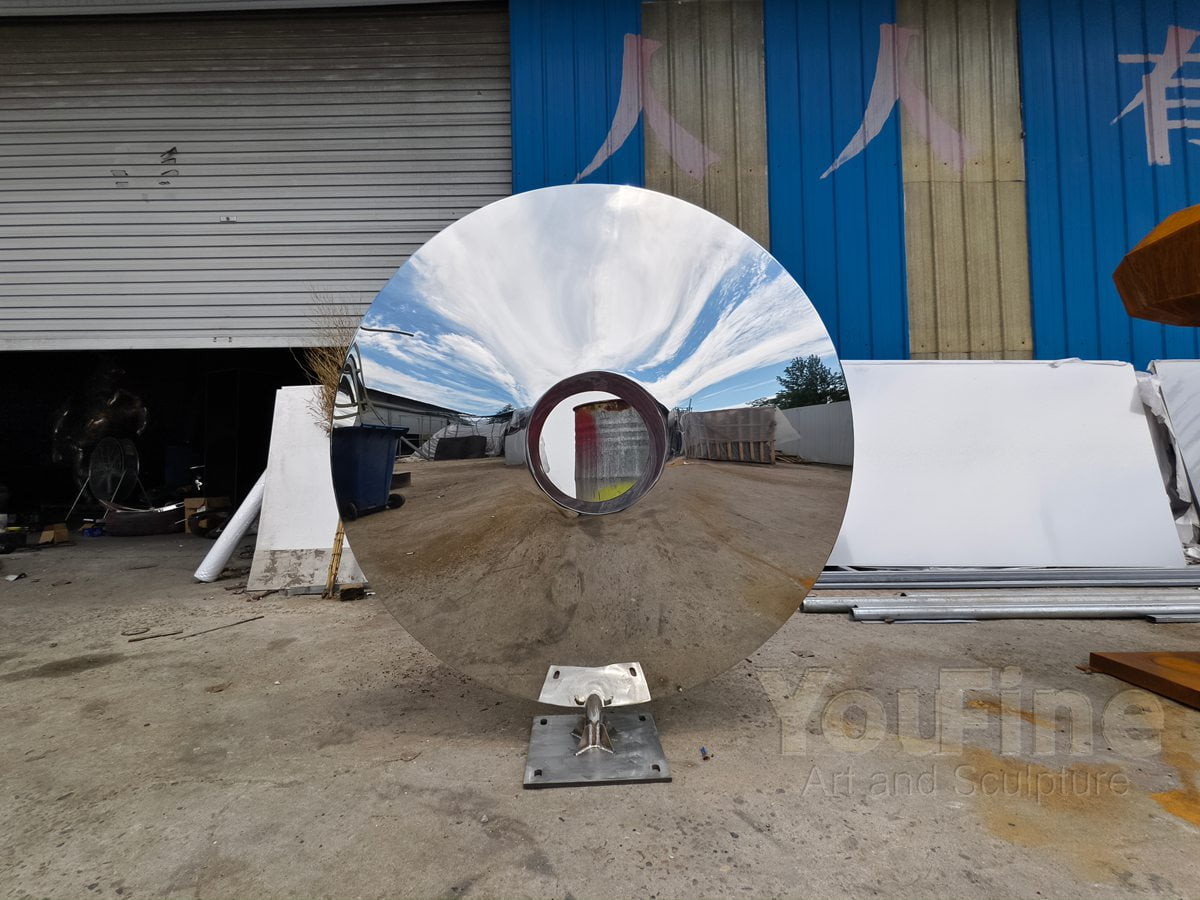
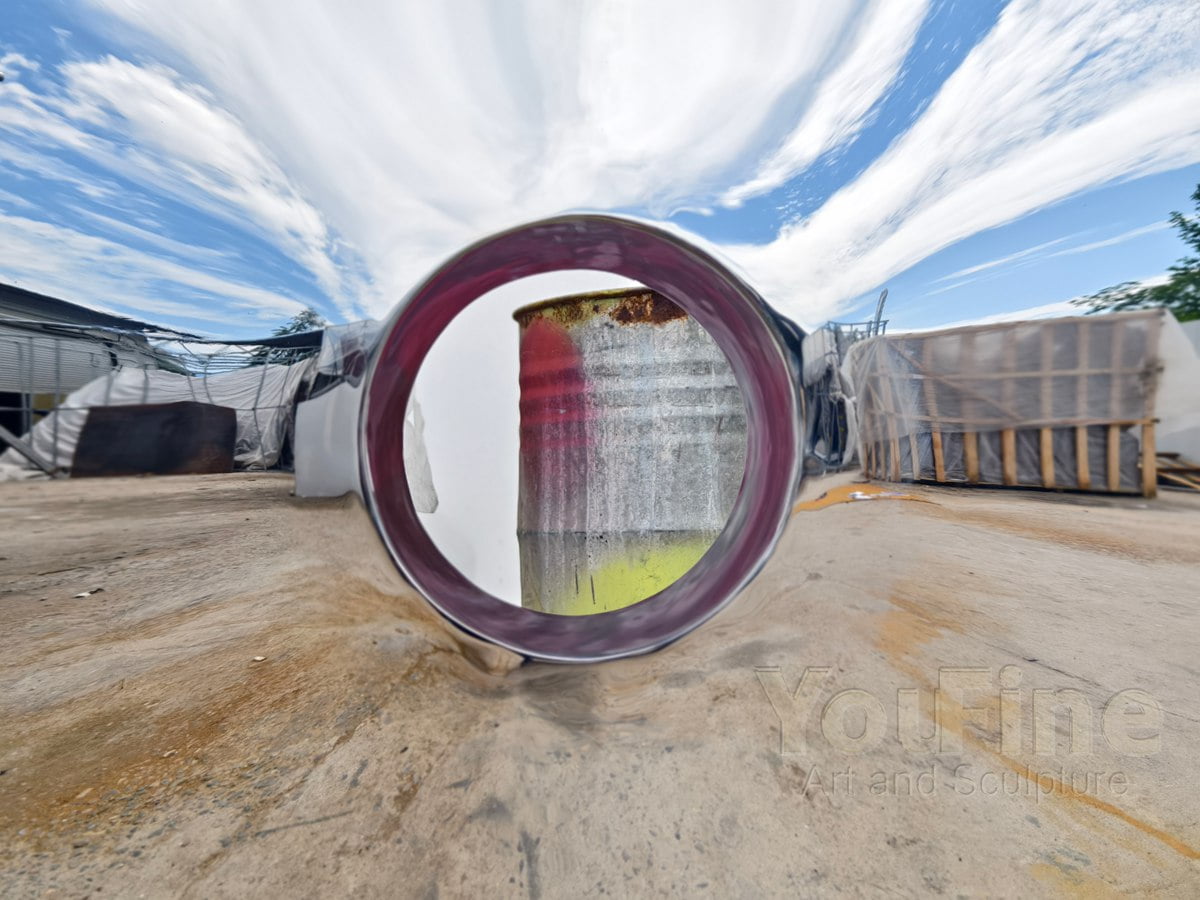
Open-center design
A central opening frames the view beyond the sculpture.
04 / Craft process
From stainless steel sheet to mirror finish
The final reflection depends on work done before installation. These workshop images show three visible stages: cutting, surface polishing, and final cleaning.
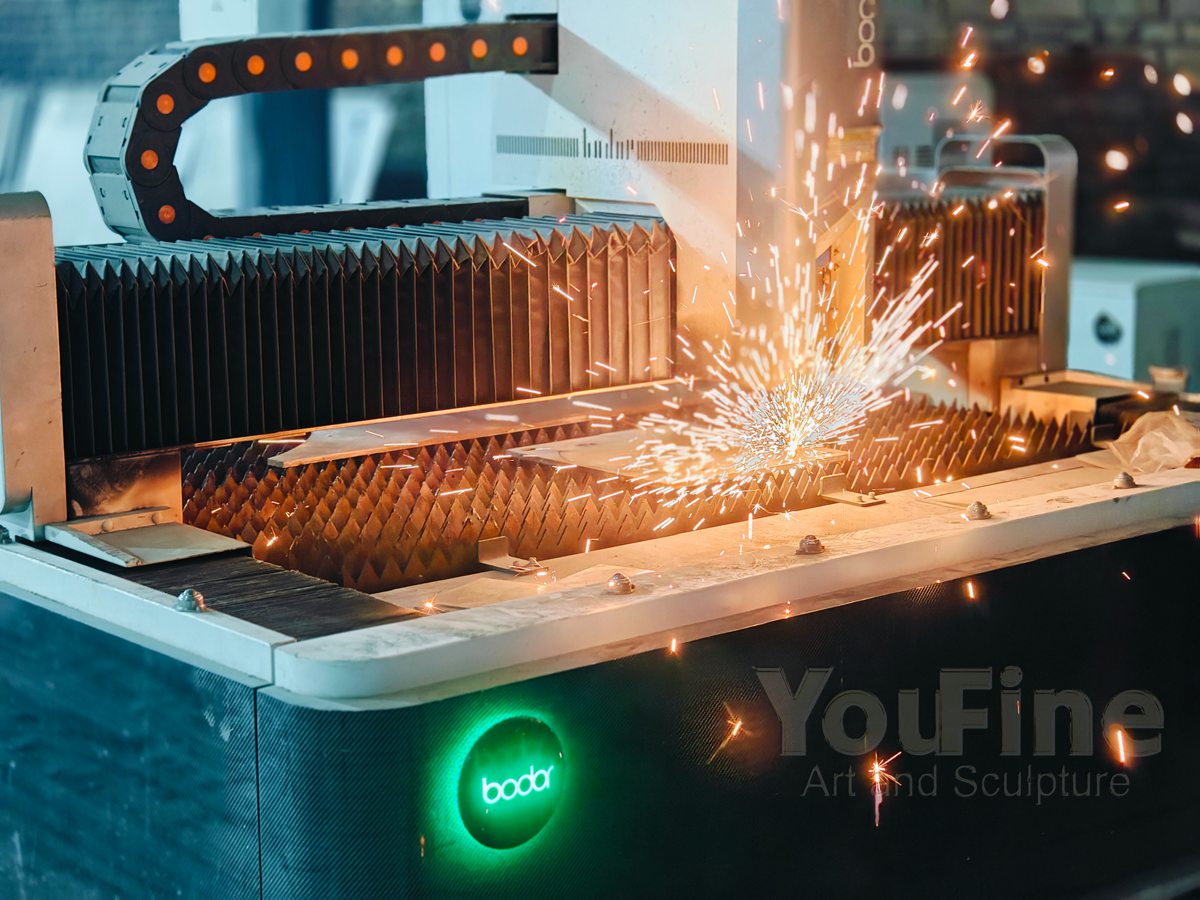 STEP 01
Cut to the design
Stainless steel sheets are cut as part of forming the planned shape.
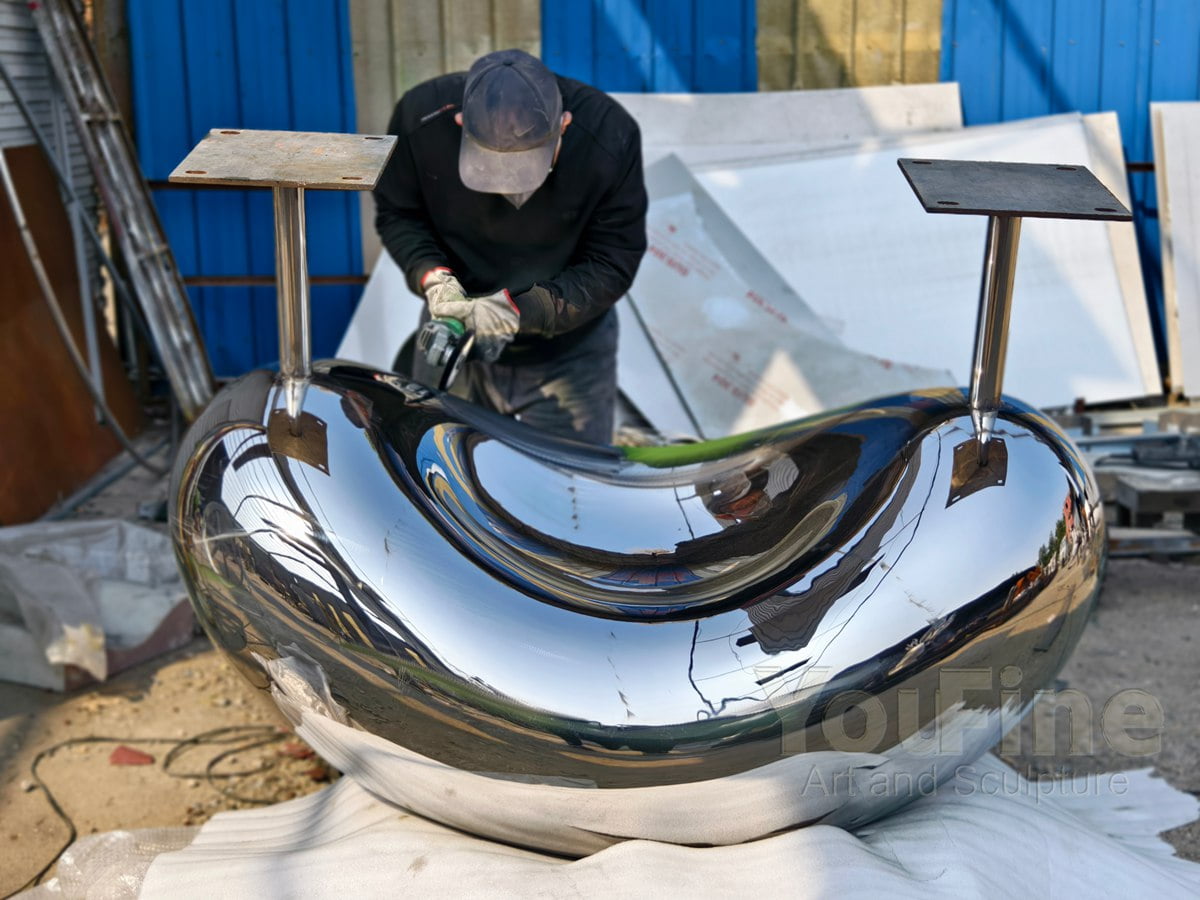 STEP 02
Polish the surface
Curved areas receive hands-on finishing to build a continuous reflective appearance.
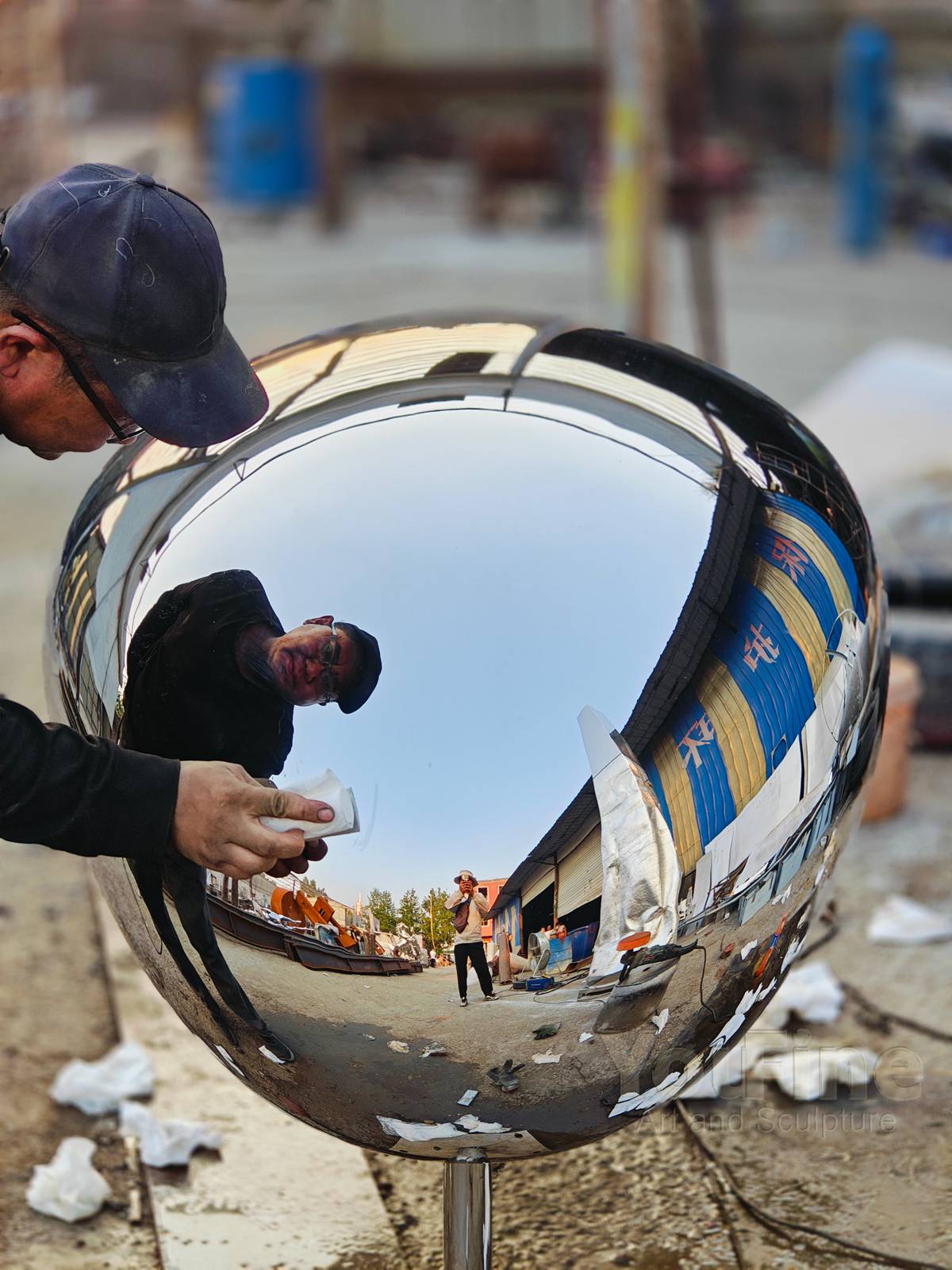 STEP 03
Clean and inspect
Wiping the surface helps reveal marks that need attention before delivery.
Choosing the steel grade: 304 and 316 stainless steel are both used for mirror-polished sculpture. The appropriate grade and upkeep plan should be selected for the installation environment, especially when salt exposure is expected.
Made for your setting
Plan the sculpture around the space
Share your preferred form, approximate size, installation location, and reference images. We can discuss the finish, material grade, and practical details before fabrication.
Discuss a custom sculpture