
What is contemporary sculpture made of?
 Tina
5 min read
Tina
5 min read
Contemporary sculpture doesn’t really follow strict traditional boundaries anymore. Instead of focusing only on realistic forms, many modern artists tend to use simple shapes and structures to express ideas, emotions, and sometimes even personal reflections about life.
In a way, these works don’t always tell you what to see directly. They leave space for interpretation—so different people can have completely different impressions.
From what we usually see in studios and public installations, contemporary sculpture materials are quite diverse.
Here are the most commonly used:
- stone
- wood
- clay
- bronze
- stainless steel
- resin and fiberglass
Details of materials used in contemporary sculptures
Stone (Marble / Granite)
Stone still plays an important role in contemporary sculpture, especially when permanence is important.
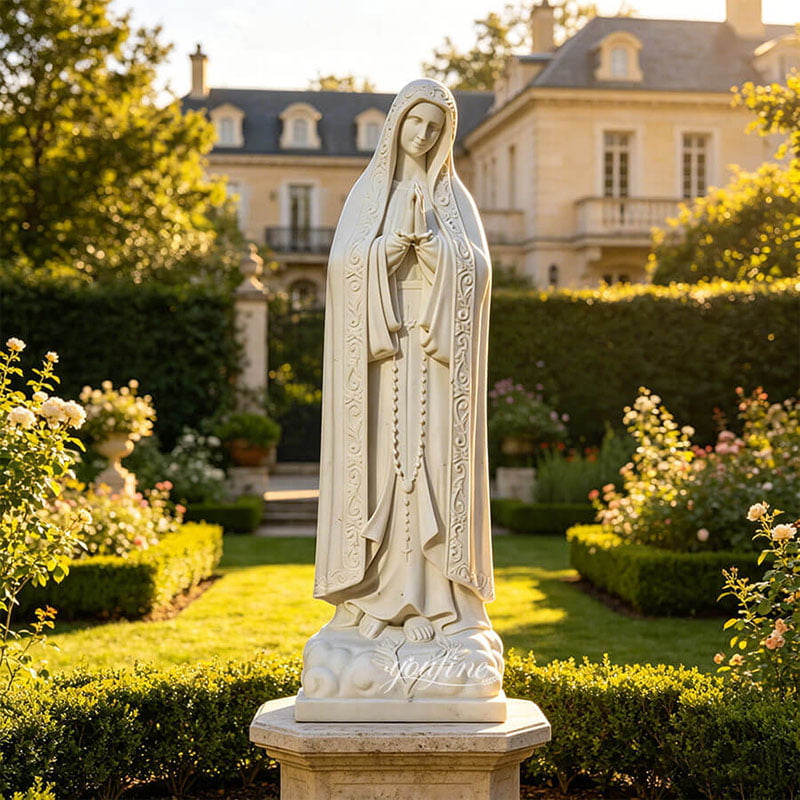
Marble, for example, has a smooth surface that looks beautiful under natural light. It’s often chosen for elegant figurative work. Many of our customers choose the white marble for the materials of our Lady of Fatima or Saint.
Granite feels very different—it’s harder and more solid. It’s often used for outdoor statues that need to last through time and weather.
In general, stone sculptures tend to give a sense of stability and long-term presence in space.
Stainless Steel
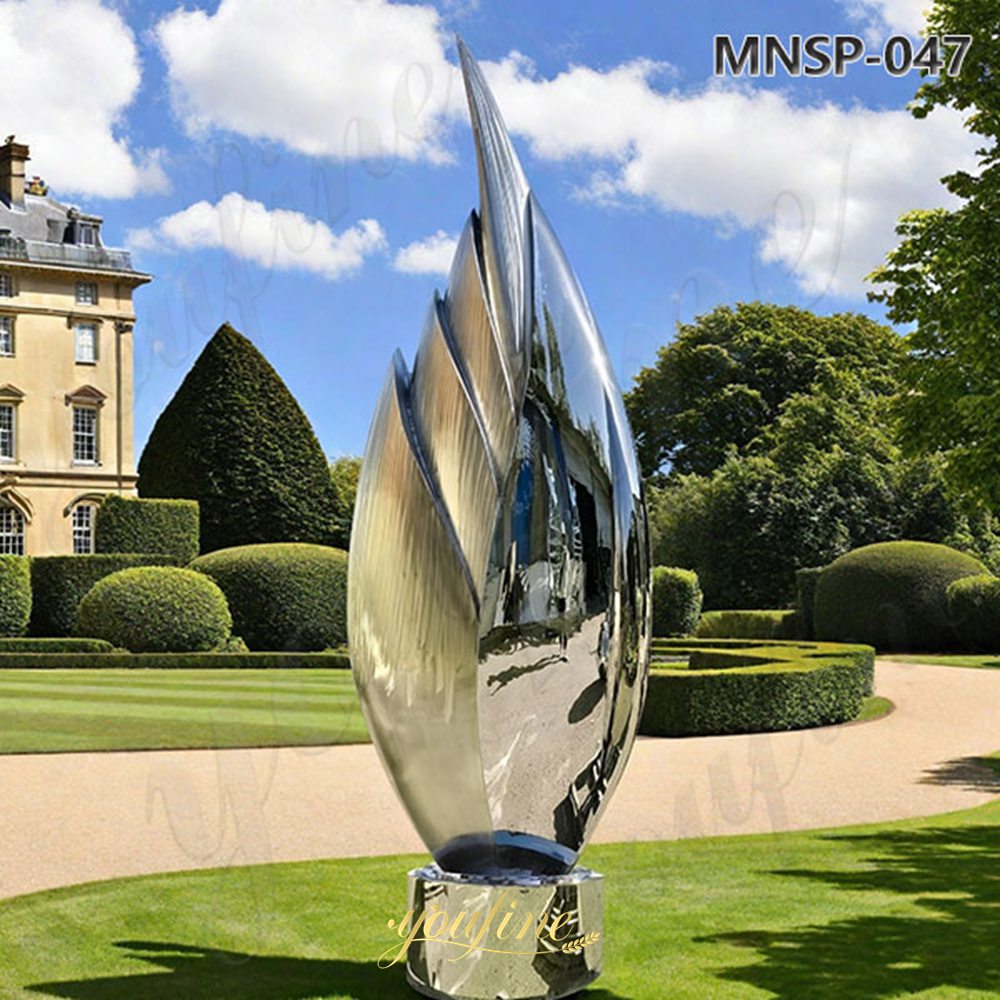
Stainless steel is probably one of the most recognizable materials in contemporary sculpture today. It can be polished, brushed, or given a matte finish, and each finish creates a completely different visual effect.
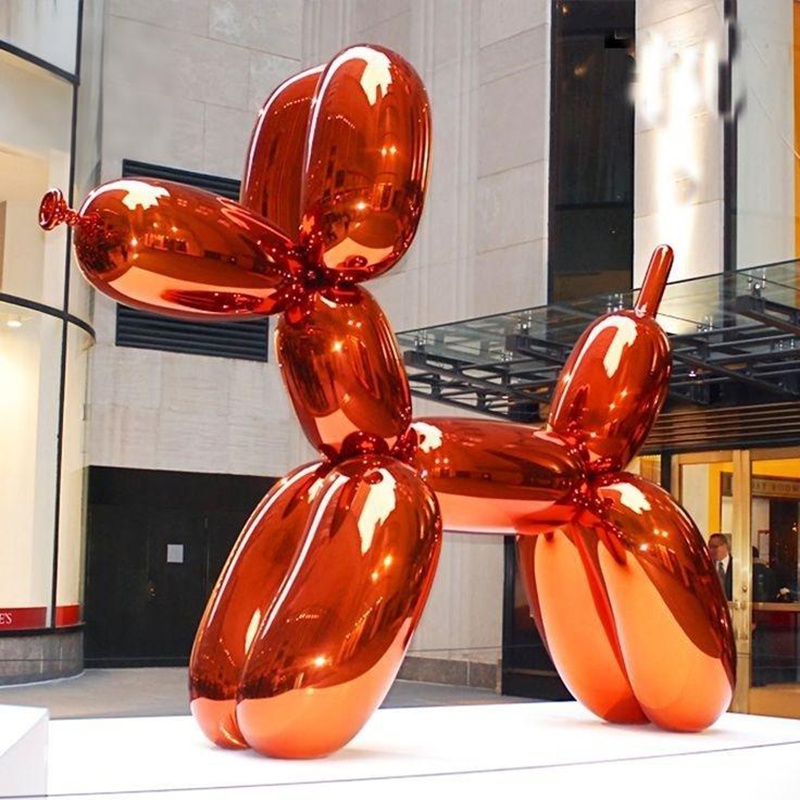
One of its most interesting features is its mirror-polished reflective surface. It can interact with light, sky, and surrounding architecture, creating a changing visual sight.
Recently, one of our customers ordered a mirror-polished stainless steel fish sculpture. She likes the surface and mentioned that she would place it in her garden, it would look really beautiful.
It is corrosion-resistant, allowing for long-term outdoor use. That’s why you often see stainless steel used in public art and outdoor installations. It is shaping the future of modern sculptures.
The most famous Balloon Dog is forged from stainless steel.
Bronze
Bronze has been used for centuries, and interestingly, it still remains one of the core materials in sculpture today.
It is an alloy made of copper and tin. One of its biggest advantages is how well it captures detail. Through processes like lost-wax casting, even very fine textures can be restored, like fabric folds or fur.
Over time, bronze also changes naturally, giving the sculpture a slightly aged appearance. Many artists actually like the surface patina because it adds another layer of time to the work.
Wood
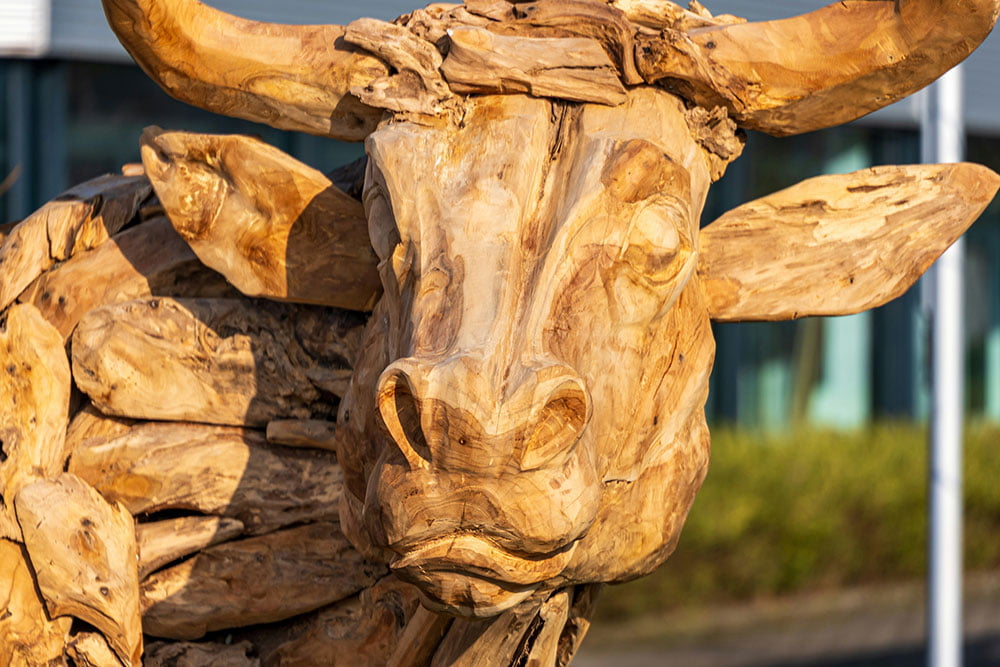
Wood has always been one of the most natural choices for sculptors. A lot of artists still prefer it simply because it’s easy to carve by hand. It allows them to shape very delicate details directly during the process.
What’s interesting is that wood already carries its own character before any carving even starts. The grain, texture, and natural imperfections all influence how the final piece turns out.
Even today, wood is still widely used for hand-carved works or smaller sculptures, especially when the artist wants something that feels warm, organic, and slightly imperfect in a natural way.
Clay (Model)
Clay is usually where everything begins. Most sculptors use it in the early stage to build models or test proportions. It’s flexible, so adjustments can be made quickly without too much risk.
Even though clay is not always the final material, it plays a very important role in shaping a sculpture.
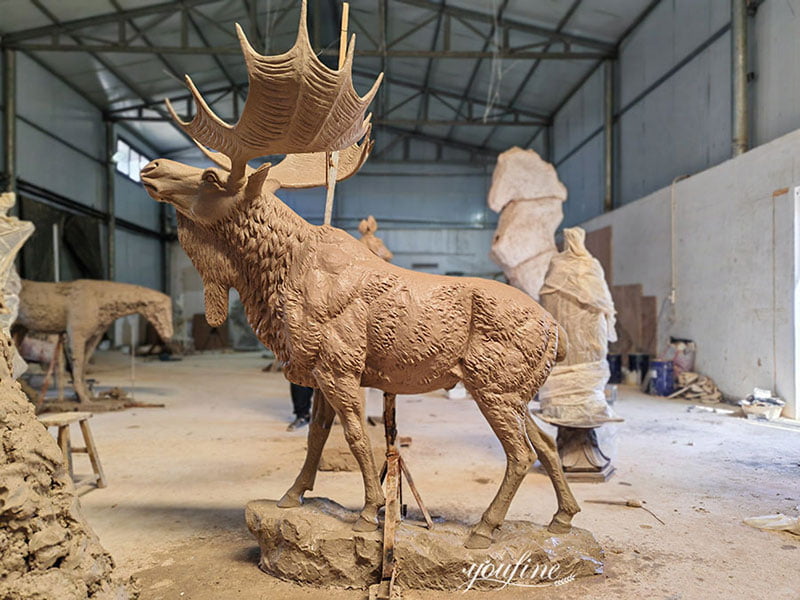
Exquisite clay model
Resin and Fiberglass
Resin and fiberglass are relatively modern materials, often used when flexibility in size and production is important.
Resin is good at capturing fine surface detail and creating smooth finishes. It’s often used for indoor sculptures or high-detail replicas. In addition, the cost is lower.
Fiberglass is lightweight but strong, which makes it suitable for large sculptures that still need to be transported and installed without too much difficulty.
In many cases, the two are combined. It gives artists much more freedom in both scale and production cost.
Contemporary vs Traditional Sculpture Materials
| Item | Traditional Sculpture | Contemporary Sculpture |
|---|---|---|
| Main materials | Stone, wood, bronze, clay | Stainless steel, fiberglass, resin |
| Style focus | Figurative, realistic | Abstract, conceptual |
| Texture | Natural, carved surface | Smooth, reflective, or mixed textures |
| Theme | Historical/cultural expression | Concept, space, and interaction |
| Purpose | Educational/spiritual/commemorative | Encouraging thinking, questioning, and engagement |
Why is stainless steel a preferred material in contemporary sculpture?
Stainless steel has become one of the most popular materials in modern sculpture. The following are reasons.
- Durability: it performs well in outdoor environments
- Low maintenance: it keeps its surface quality over time
- Reflective aesthetic: it interacts with light and surroundings
- Solid Structural: allows complex and large-scale forms
Indoor vs Outdoor use of contemporary sculpture
Indoor sculptures: Many indoor sculptures are crafted from wood, bronze, stone, and resin. Because it will be observed by many people, the details of the sculpture need to be exquisite.
Outdoor sculptures: For outdoor sculptures, the first thing that needs to be considered is the weather corrosion. Therefore, stainless steel is often chosen as the high-quality 304 or 316 steel, which is highly corrosion-resistant. In addition, bronze material is also suitable.
Conclusion
Contemporary sculpture is becoming increasingly popular over time. They have different display forms made of various materials. Among the various materials used in contemporary sculpture, stainless steel has become one of the most commonly used in modern art.
Tina
Sculpture artist and content contributor at YouFine Sculpture, sharing insights on metal art, craftsmanship, and creative process.
View All Posts
304 vs 316 Stainless Steel for Outdoor Sculptures: Do You Really Need 316?
Short answer: For most inland outdoor locations, 304 stainless steel is a sound choice. 316 earns its higher...
Read More
How Long Does Corten Steel Sculpture Last?
The Corten steel sculpture can last 50-100 years in general. This is not a random number. It is...
Read More
10 Best Abstract Sculptures Ever
What is abstract sculpture? It does not look like traditional animal or figure sculptures. Instead, it is usually...
Read More